In Marlowe & Tate’s kitchen
The small thermometer that ends the guesswork
Tate carves while Marlowe checks the center: one quick reading turns doneness from a hunch into a repeatable habit.
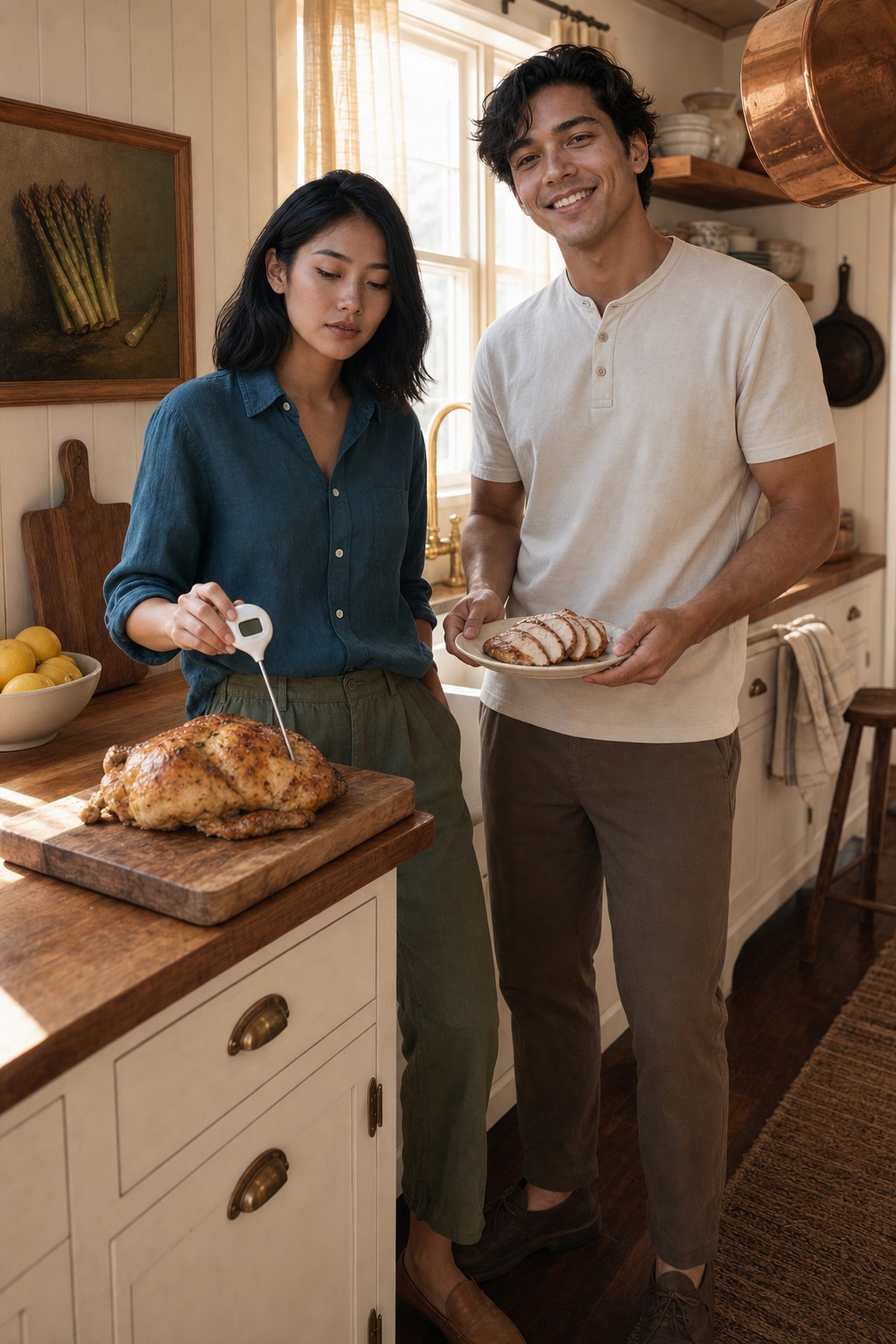
The chicken has rested, Tate has the carving knife ready, and Marlowe checks the thickest part before anyone commits to the first slice. The reading takes seconds and settles the question without cutting the bird open.
That small pause changes the whole rhythm of cooking. Heat is no longer judged by color alone, and the oven door does not need to stay open while everyone debates whether dinner is done.
An instant-read thermometer is most useful when it stays close enough to become automatic. A folding probe in the utensil drawer beats a more elaborate tool stored somewhere inconvenient.
The result is not technical theater. It is confidence: knowing when to stop cooking, when to rest, and when the leftovers have reheated safely.
Before buying
What to look for
- Look for a quick settling time, a readable display from either hand, and a probe thin enough not to tear delicate food.
- Water resistance and an easy-to-clean body matter more in daily use than an app or a long list of modes.
At the worktable
How to use it well
- Insert the probe into the thickest part from the side when possible, avoiding bone and pockets of fat.
- Check more than one spot, then wait for the number to settle before moving the probe.
After the work
Care that keeps it useful
- Wipe the probe with hot soapy water after every reading that touches raw food and before checking cooked food again.
- Fold the probe dry, keep the hinge free of debris, and replace the battery when the display begins to fade.