Journal field note
Wash the swatch the way you intend to wash the shirt
Corduroy looks identical on the bolt and behaves differently after washing. Cut a square, wash it as the shirt will be washed, then decide.
The rule is short and it comes from a mistake: wash the swatch the way you intend to wash the shirt. We learned it by buying a cord shirt that looked pre-shrunk, washing it warm because it looked pre-shrunk, and discovering on the second wear that the sleeves had shortened by nearly a centimetre and the wales along the placket had flattened into a shine.
The test costs an hour and a scrap of cloth. Before you buy, ask the shop for a swatch; most will cut one from the hem allowance, and an online seller will often send a square if you ask. Failing that, buy the shirt, keep the receipt, and cut a ten-centimetre square from the spare hem before you remove the tags. If neither is possible, walk away, because the test is the only honest information available about what the garment will do.
Label the swatch with a pencil on a corner: the date, the fibre, and the temperature you intend to use. Then measure it flat, before anything happens to it. Write down the width and the length in millimetres, not your impression of them, and count the wales across five centimetres. That last number matters more than the others for corduroy, because a wash can leave the width almost unchanged while flattening the pile, and the flattened pile is what makes a cheap shirt look old before its time.
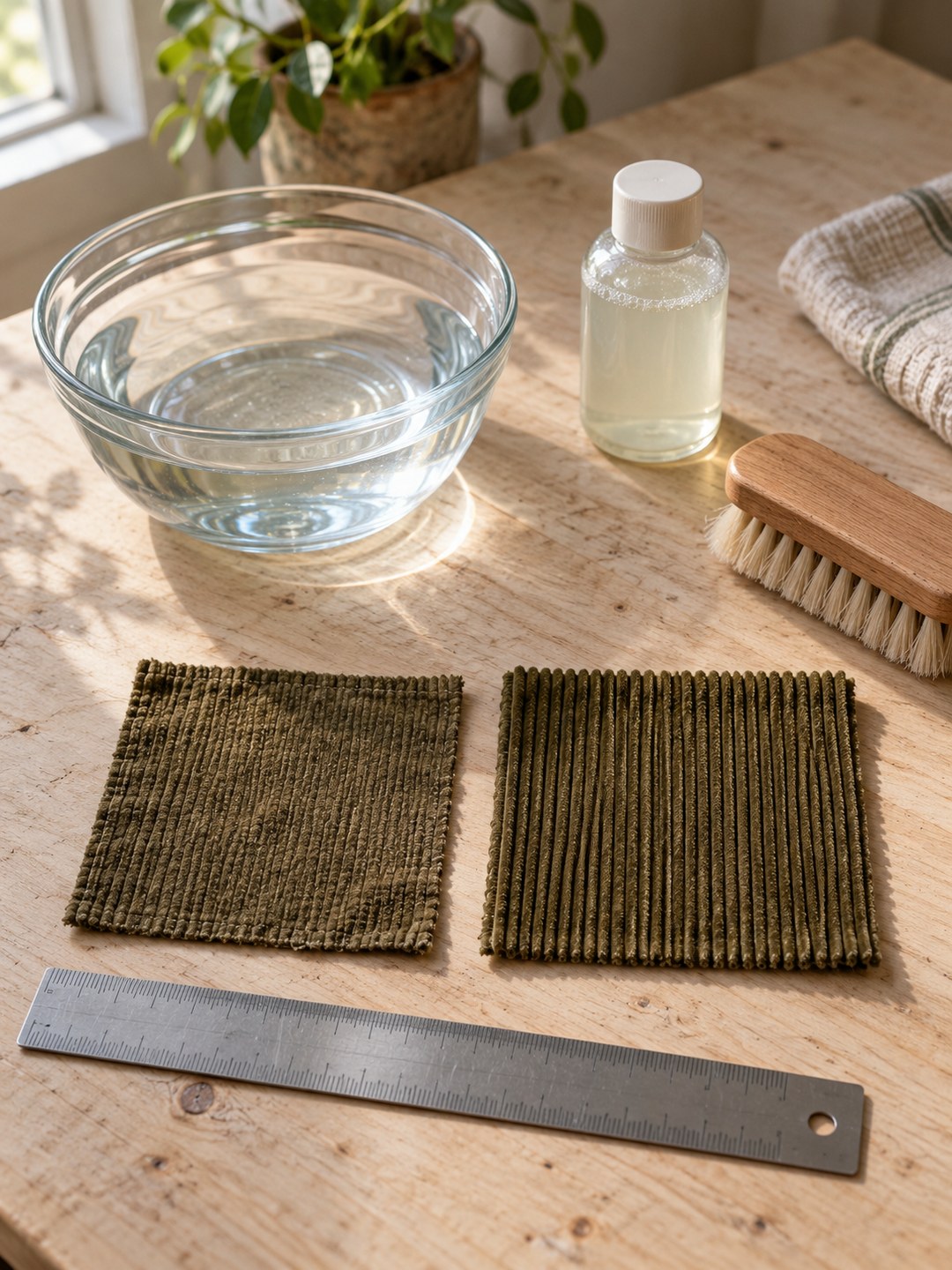
Wash the swatch exactly as you intend to wash the shirt. Same temperature, same detergent, same load size, same spin. If you plan to wash it with jeans, wash the swatch with jeans, because the abrasion in a mixed load is part of what the garment will actually endure. Dry it the way you intend to dry the shirt: on a line, flat, or in a low tumble. A swatch dried on a radiator tells you nothing about a shirt dried on a line, and the difference in corduroy is visible after a single cycle. Forty minutes in a low tumble is enough to show whether the pile lifts or lies flat, and it is the drying, not the washing, that most people get wrong.
Then measure again and read the numbers plainly. Up to two per cent shrinkage in either direction is normal and the garment will still fit as bought. Between three and five per cent means you should size up, or plan to wash cold and accept a closer fit after the first month. Above five per cent is a refusal: the shirt will keep moving for another two washes and will never sit where it did on the hanger. Check the colour too, by pressing the damp swatch against a white cloth for a minute. A transfer means the shirt will mark pale trousers on a warm day.
The wales need their own line in the notes. Look at the swatch under a lamp and then across it. If the ridges have gone soft and the surface has a flat sheen, the cloth will not recover, no matter how carefully you brush it afterwards. If the ridges still stand and only the edges have curled, the shirt is sound and a soft brush while barely damp will bring the texture back after each wash.
What the swatch cannot tell you is how the collar will wear, whether the thread at the buttonholes will fray, or whether the shoulder seam was sewn with enough ease. The last shirt we tested came back at two per cent in the length and four per cent across, with the wales still standing, and we bought it one size up and washed it cold. It has been through eleven washes and the cuffs are the first thing to go, which the swatch never mentioned.