This week's work ·
The three-knife set that covers a kitchen
A three-knife Wüsthof set, the jobs each blade covers, and the honest care tradeoff behind a smaller block.

Who it’s for
A six-blade block can still leave the useful jobs uncovered. This three-piece Wüsthof set assigns clear roles: a paring knife for small work, a utility knife for the middle ground, and an eight-inch chef's knife forged in Germany.
Specifications
The three knives you actually use — a 3.5-inch paring knife, a 6-inch utility knife, and the 8-inch chef's knife — forged in Solingen from a single block of high-carbon stainless steel. The set that retires the six-blade block.
Why we liked it
We love the clean division of labor: the chef's knife handles the main cuts, the paring knife takes detail, and the utility knife bridges the middle. Three blades give a compact kitchen a proper prep rhythm.
The tradeoffs
It costs more than a set knife and every blade needs hand washing and regular honing. Skip it if you'd rather replace cheap blades than care for good ones.
Where it works well
Balance matters more than brute weight. The chef's knife should move through tomatoes without crushing them, while a honing steel keeps the edge aligned between proper sharpenings. Three blades can cover a kitchen when each has a real job.
Alternatives
The honest catch: good blades need hand washing and routine honing, and a steel realigns an edge rather than sharpening a dull one. The smaller set rewards care instead of hiding neglect behind extra pieces.
Verdict
The influencer version is a large block or a collectible Japanese blade. This is the practical middle: three forged knives, defined roles, and less counter space.
03 · Linked objects
The things worth mentioning.
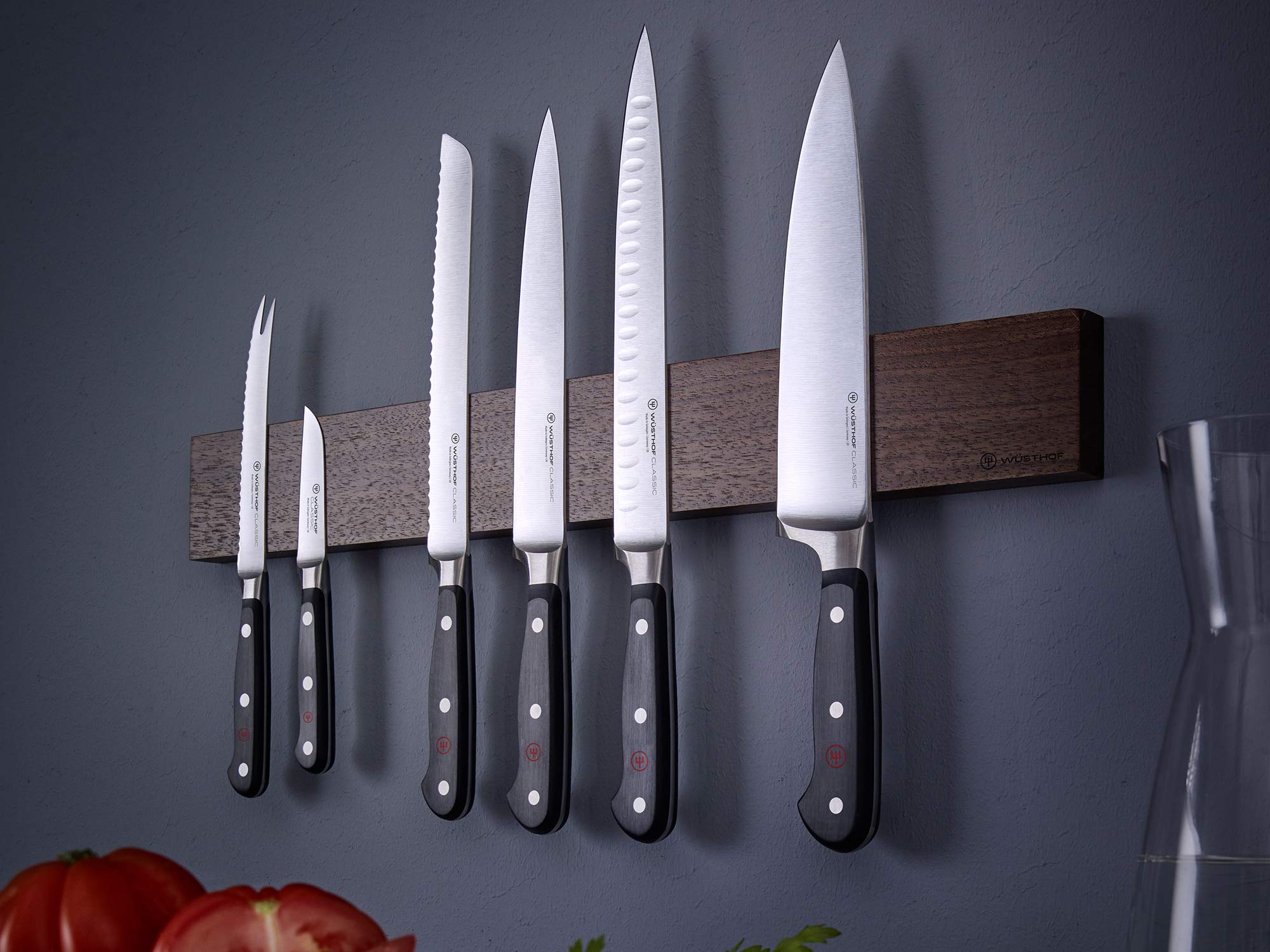
WÜSTHOF Classic 3-Piece Prep Knife Set
The three knives you actually use — a 3.5-inch paring knife, a 6-inch utility knife, and the 8-inch chef's knife — forged in Solingen from a single block of high-carbon stainless steel. The set that retires the six-blade block.
We love the clean division of labor: the chef's knife handles the main cuts, the paring knife takes detail, and the utility knife bridges the middle. Three blades give a compact kitchen a proper prep rhythm.
Worth knowing: It costs more than a set knife and every blade needs hand washing and regular honing. Skip it if you'd rather replace cheap blades than care for good ones.
See the exact item on Amazon
ZWILLING Professional 12-Inch Oval Sharpening Steel
The oval sharpening steel from Zwilling — a 12-inch rod that realigns a blade's edge in thirty seconds a day. The affordable tool that keeps a good knife good for years. The quiet companion to the chef's knife.
We love the simple maintenance rhythm: a few strokes before each session, with an oval rod that gives more surface contact and needs fewer strokes than a round steel. It's the small tool that helps an expensive edge stay ready.
Worth knowing: A steel realigns an edge — it doesn't sharpen a dull blade. You'll still need a real sharpening once or twice a year.
See the exact item on Amazon