Today's work · 2026-08-30
The pepper mill that made grind size part of the recipe
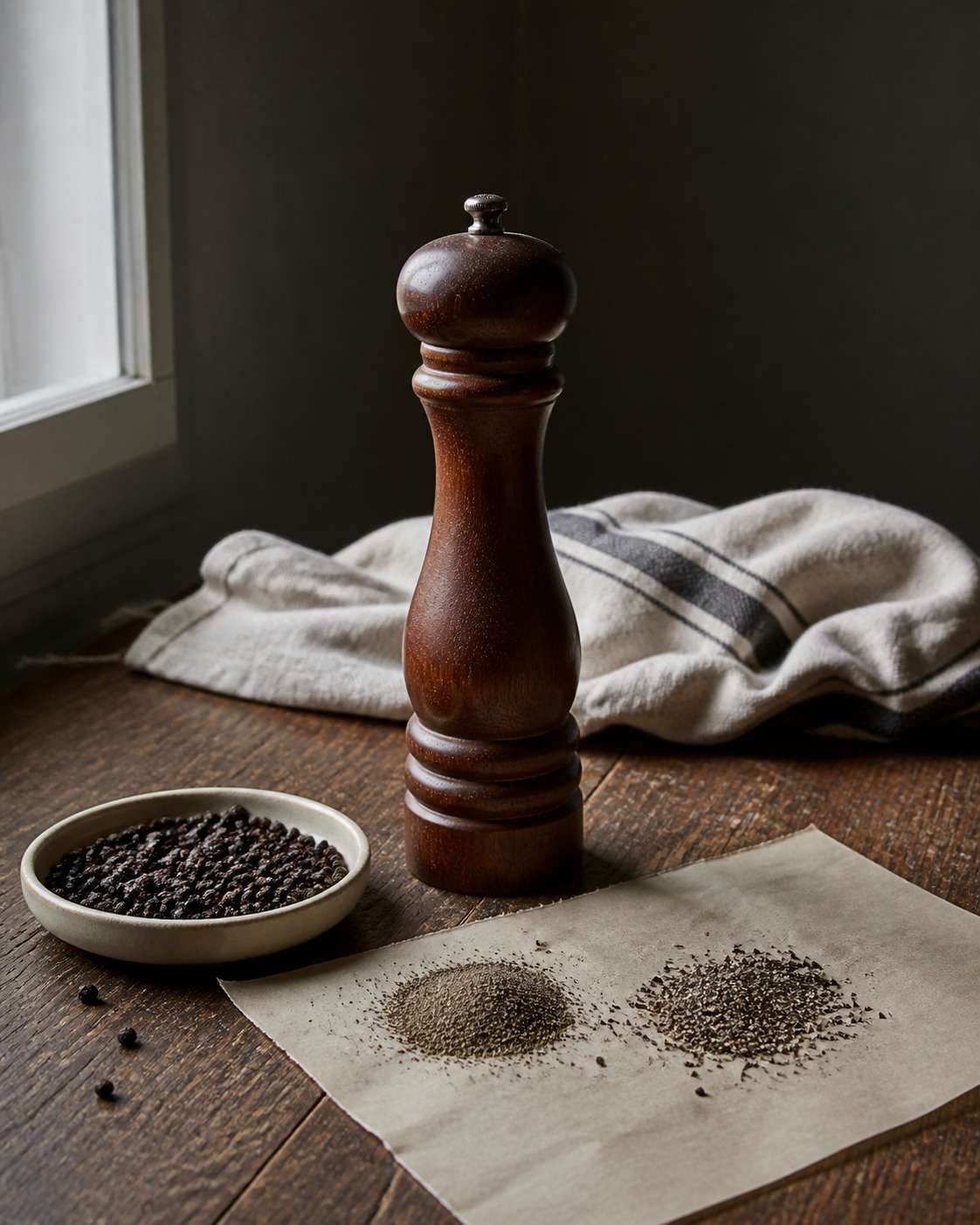
Three small piles—fine, middle, and coarse—turned an everyday pepper mill into a more deliberate kitchen tool.
Who it’s for
A pepper mill is often the last object reached for, somewhere between carrying a plate to the table and sitting down. That habit makes every grind the same: a hurried twist over eggs, tomato salad, a pan sauce, whatever is nearest. The mill does its job, but grind size never becomes part of the cooking decision.
Specifications
A 9-inch French beechwood pepper mill with Peugeot's steel pepper mechanism and an indexed u'Select ring at the base. It is the classic curved Paris form, made for setting a grind and returning to it.
Why we liked it
The setting stays part of the recipe: fine for a smooth pan sauce, medium for the skillet, coarse at the table. The wood body feels like a kitchen tool rather than a countertop appliance.
The tradeoffs
The wood body should be wiped rather than washed, the top opening rewards a small funnel, and a manual mill is slower than an electric grinder when a recipe needs a large volume of pepper.
Where it works well
One quiet kitchen test changes that. Put parchment on the worktable and make three small piles with the same peppercorns: fine, middle, and coarse. The fine grind spreads like dust and disappears readily into warm butter. The middle setting gives a skillet an even, familiar bite. The coarse grind stays visible and announces itself when it lands on a tomato wedge.
Alternatives
Compare the exact item with alternatives by capacity, fit, finish, and the work you actually expect it to do.
Verdict
The right choice is the one whose stated fit and tradeoff match the work in front of you.
03 · Linked objects
The things worth mentioning.
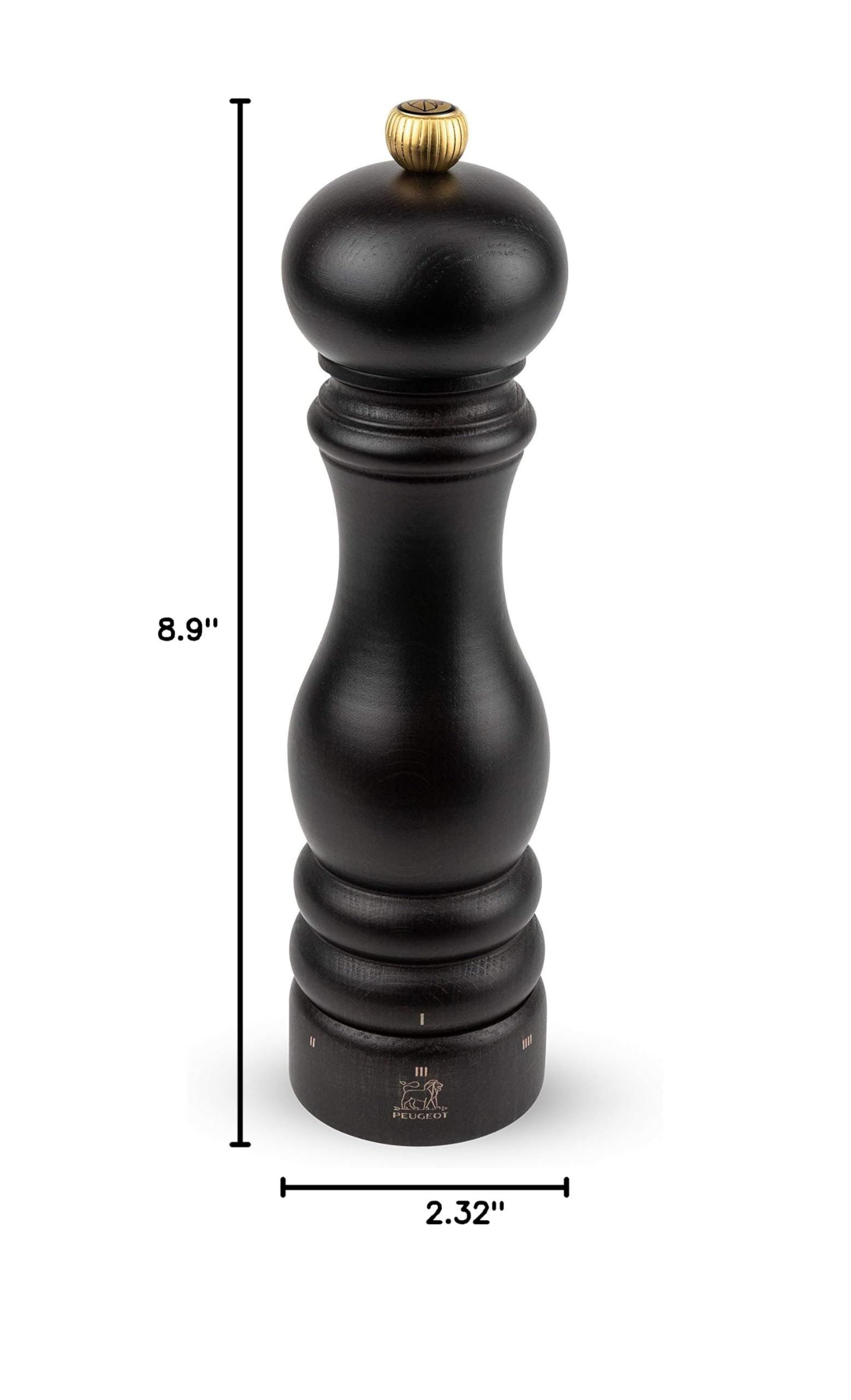
Peugeot Paris u'Select 9-inch Pepper Mill, Chocolate
A 9-inch French beechwood pepper mill with Peugeot's steel pepper mechanism and an indexed u'Select ring at the base. It is the classic curved Paris form, made for setting a grind and returning to it.
The setting stays part of the recipe: fine for a smooth pan sauce, medium for the skillet, coarse at the table. The wood body feels like a kitchen tool rather than a countertop appliance.
Worth knowing: The wood body should be wiped rather than washed, the top opening rewards a small funnel, and a manual mill is slower than an electric grinder when a recipe needs a large volume of pepper.
See it on Amazon