This week's work ·
Citrus, winter greens, and the first salad of the new year
January citrus is at its peak, so we built a salad around it — bitter greens, juicy segments, toasted seeds, and a honey-lemon dressing. It's the bright thing January needs.
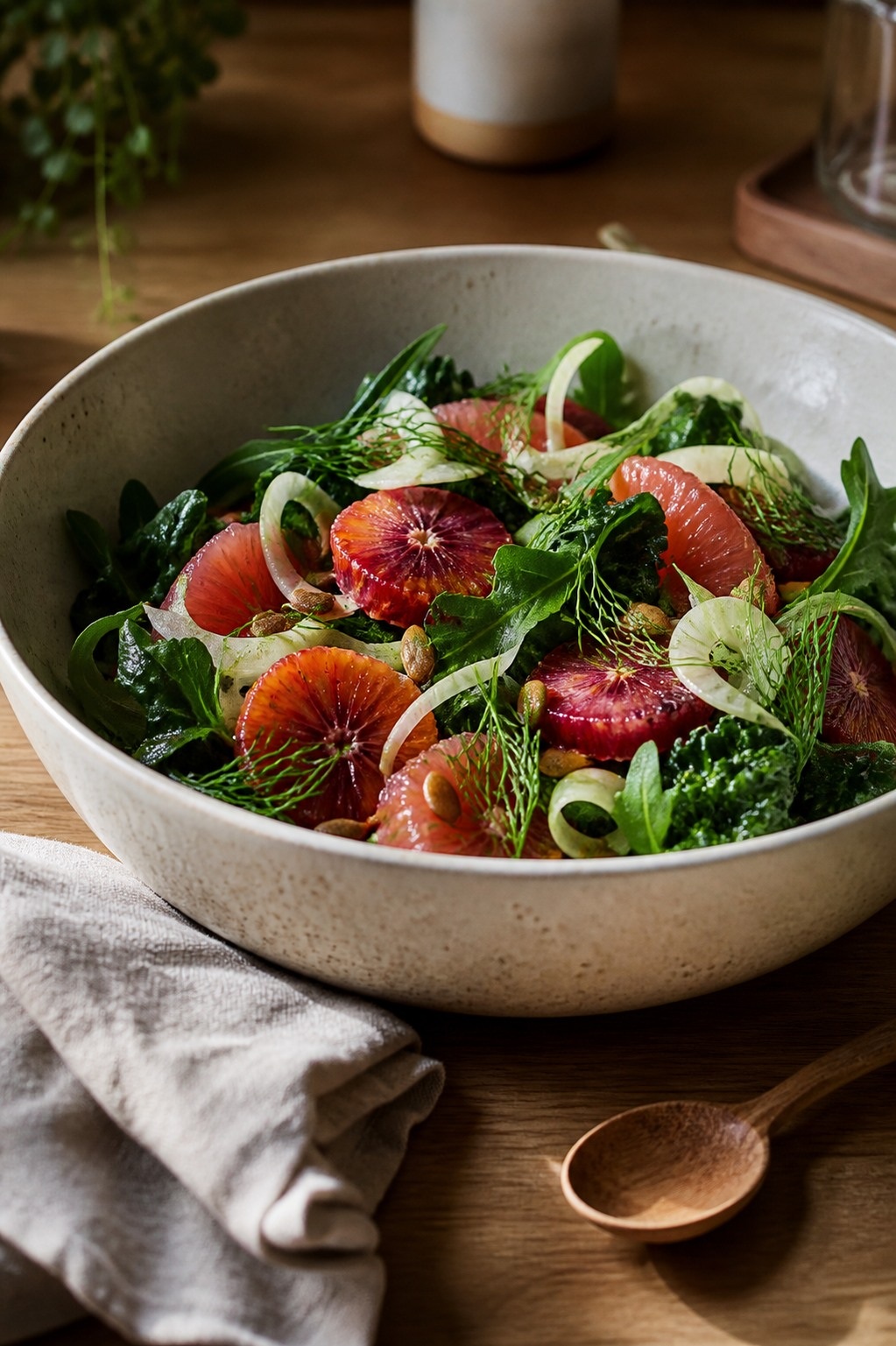
The first week of January is a hard time to eat well — everything in the market looks like it's been waiting in the dark. But the citrus bins were glowing: blood oranges, cara cara, a few grapefruit the size of softballs. We bought more than we needed and let the oranges set the menu.
We built the salad the way winter salads should be built: a pile of sturdy greens, citrus segments cut into the bowl so the juice falls in with them, a handful of toasted sesame seeds, and a dressing of olive oil, lemon, and a spoonful of honey. No delicate leaves — these greens can take a dressing and a day in the fridge.
We ate it alongside a simple roast chicken and agreed it was the brightest thing we'd cooked in weeks. The trick is the segments: cut them over the bowl, let the juice become part of the dressing, and the whole salad tastes like sunshine instead of January.
The lesson was about working with the season instead of against it. Winter greens and peak citrus are a pairing that needs nothing else — just a sharp knife, a good oil, and someone willing to stand at the counter and segment oranges.
Cut the citrus over the bowl, let the juice become part of the dressing, and the whole salad tastes like sunshine instead of January.
02 · The recipe
Citrus and Winter Greens Salad
Sturdy winter greens tossed with juicy citrus segments, toasted sesame seeds, and a honey-lemon dressing — the bright salad January needs.
- Prep
- 20 min
- Cook
- 5 min
- Total
- 25 min
- Yield
- 4 servings
What you'll need
Non-perishable
- 1/4 cup olive oil
- 1 tablespoon honey
- 1/2 teaspoon fine sea salt
- 1/4 teaspoon freshly cracked black pepper
- 2 tablespoons sesame seeds, toasted
- Flaky sea salt, to finish
Perishable
- 1 large bunch sturdy winter greens (kale or escarole), torn into bite-size pieces
- 2 blood oranges or cara cara oranges
- 1 grapefruit
- 2 tablespoons fresh lemon juice
Useful equipment
Method
- Toast the sesame seeds in a dry skillet over medium heat, shaking often, until fragrant and lightly golden, about 2 minutes. Set aside.
- Segment the oranges and grapefruit over a wide bowl so the juice collects — cut the top and bottom off each fruit, slice away the peel and pith, then cut the segments free between the membranes.
- Whisk the olive oil, lemon juice, honey, fine sea salt, and pepper in a small bowl until the honey dissolves.
- Toss the greens with the dressing in a large bowl, then add the citrus segments and any collected juice and toss gently once more.
- Scatter the toasted sesame seeds and a pinch of flaky salt over the top and serve right away.
03 · Linked objects
The things worth mentioning.

Frantoia Sicilian Extra Virgin Olive Oil
A salad dressing is mostly oil — this is the one that makes the citrus taste more like itself.
Why we loved it: It's peppery and green in the way fresh-pressed oil should be, and it makes a simple dressing taste like it came from a restaurant. Everything in the bowl builds on that first pour.
Worth knowing: It's pricier than a big jug of everyday oil, so the selected option suits dishes like this.
See the exact item on Amazon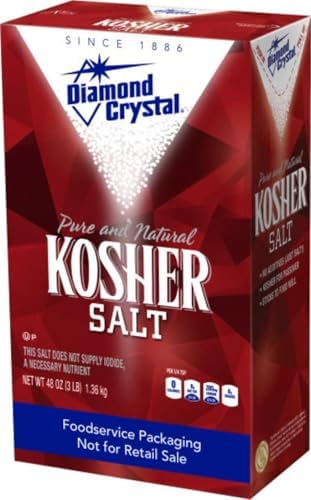
Diamond Crystal Kosher Salt
Salt is what makes the greens and citrus taste like themselves — this is the selected option.
Why we loved it: The crystals are light and grabby, so you can season by feel, and they dissolve evenly into the dressing. It's the salt selected for everyday use.
Worth knowing: It's a bigger box than you need at first, but it keeps forever and you'll use it daily.
See the exact item on Amazon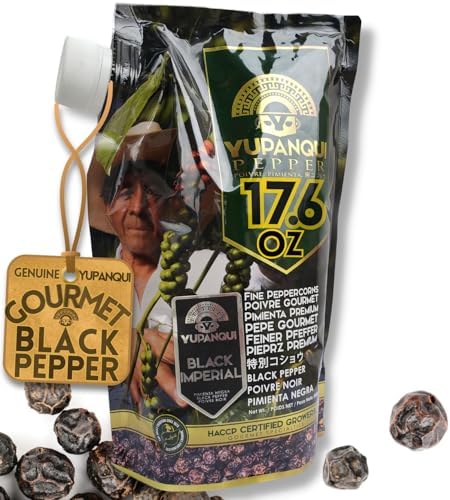
Yupanqui Organic Black Peppercorns
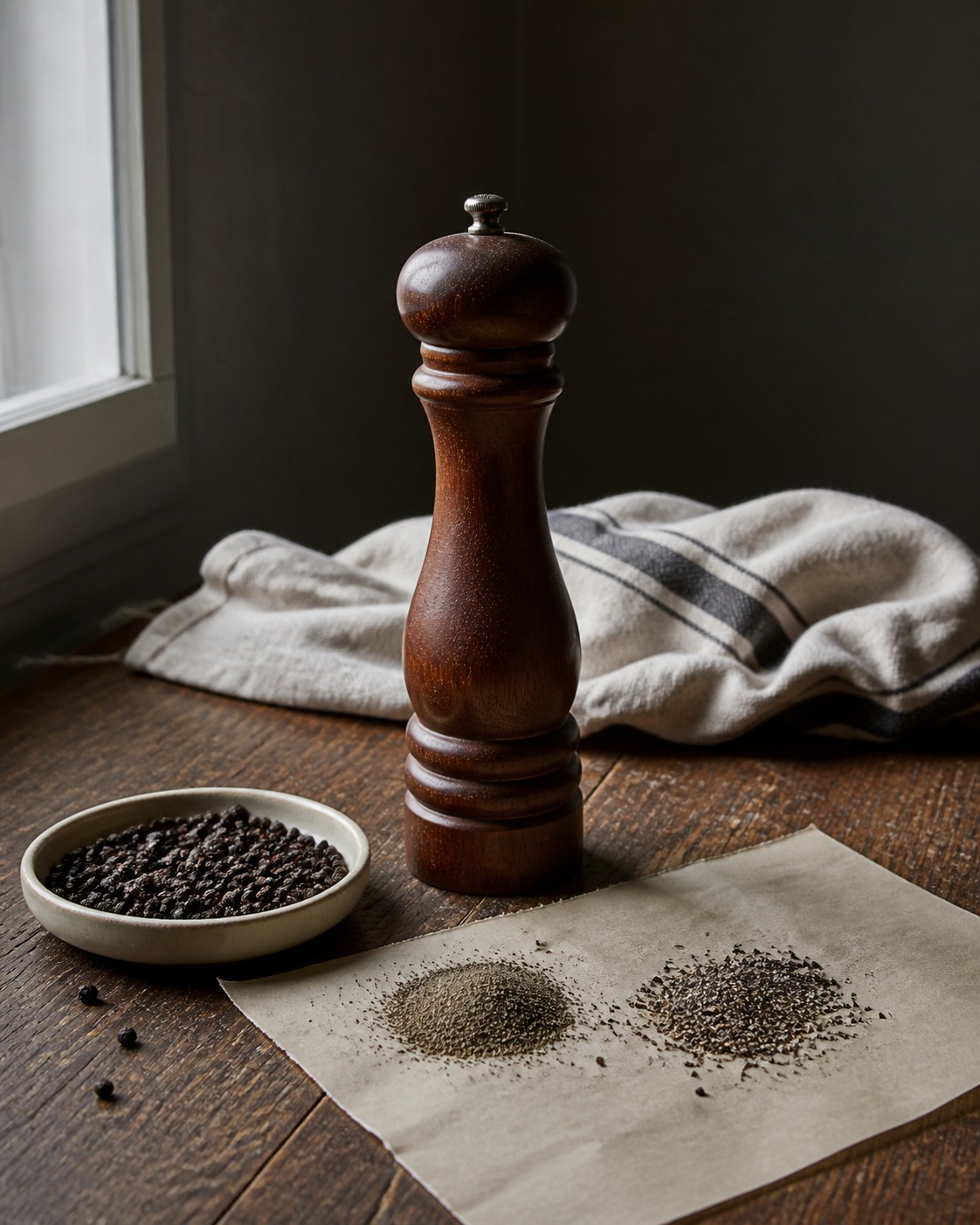
Fresh-cracked pepper is doing real work here.
Why we loved it: A few cracks of pepper over the finished salad is the finishing move — and this one has the aroma to make a quarter teaspoon matter.
Worth knowing: It's a single-origin spice in a generous bag — costs more than the supermarket tin, but it stays whole and aromatic for months.
See the exact item on Amazon
Fischer's Raw Unfiltered Honey
A little honey keeps citrus dressing from turning harsh; this jar gives the finish a clean sweetness.
Why we loved it: It's thick, unfiltered, and tastes like the flowers it came from. One spoonful in the dressing balances the lemon without making the salad sweet.
Worth knowing: Raw honey crystallizes over time — warm the jar gently and it flows again.
See the exact item on Amazon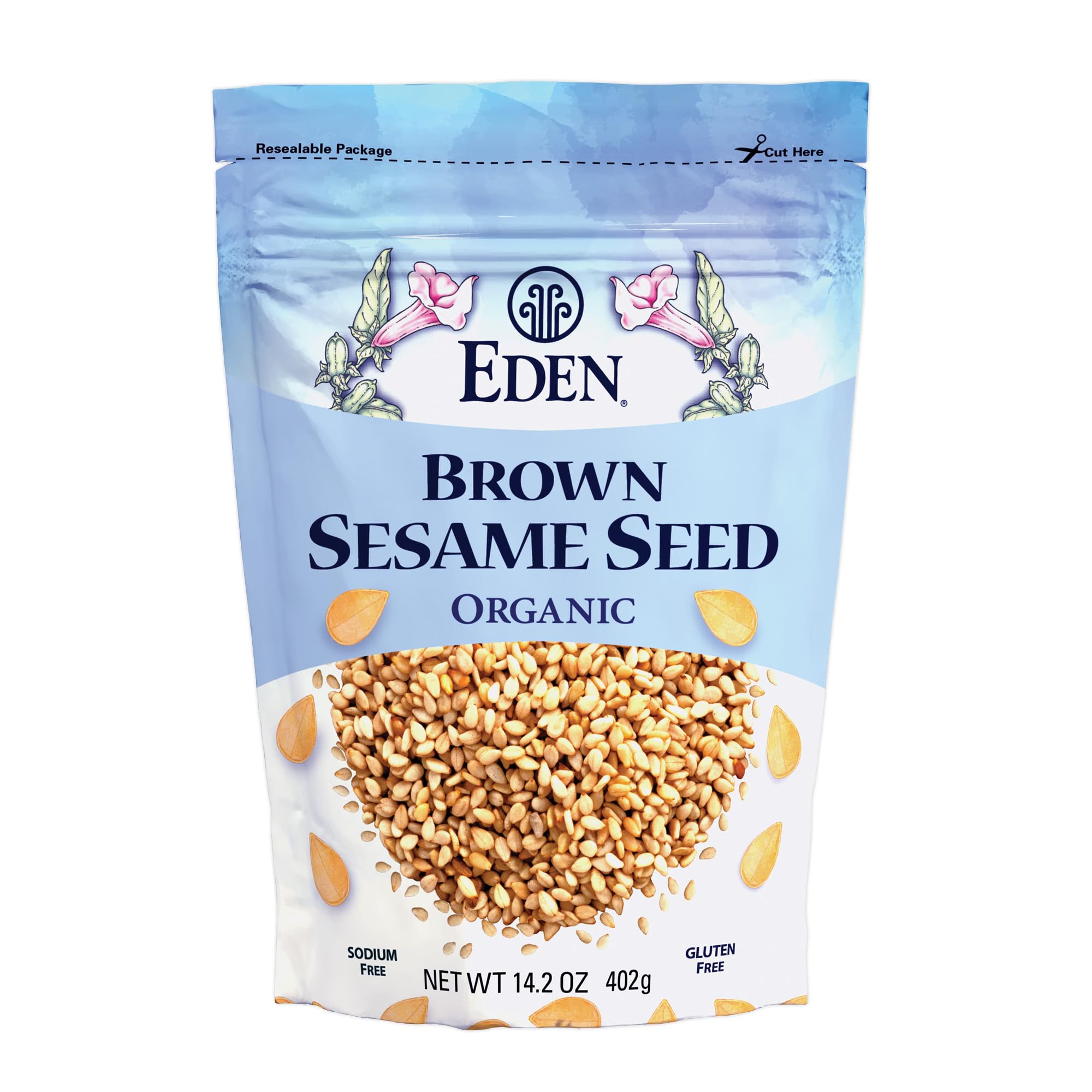
Eden Organic Brown Sesame Seeds
Toasted seeds give the salad its textural finish; this bag is a practical pantry choice for the final scatter.
Why we loved it: Unhulled seeds keep more of their flavor, and toasting them dry for a minute wakes them right up. They add the little pop of crunch the salad deserves.
Worth knowing: Toasting is a 60-second job — skip it and you lose half the flavor.
See the exact item on Amazon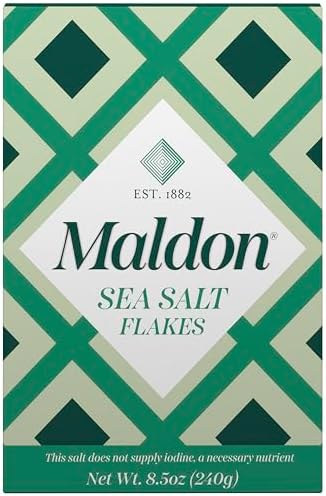
Maldon Sea Salt Flakes
Finishing salt is what makes fresh things taste crisp and clean — this is the one everyone reaches for.
Why we loved it: The pyramid flakes are the whole point — a clean mineral taste, a light crunch, and they dissolve fast on fresh food. A pinch over the top is plenty.
Worth knowing: It's pricier than table salt, but you use a pinch at a time and it keeps for years.
See the exact item on Amazon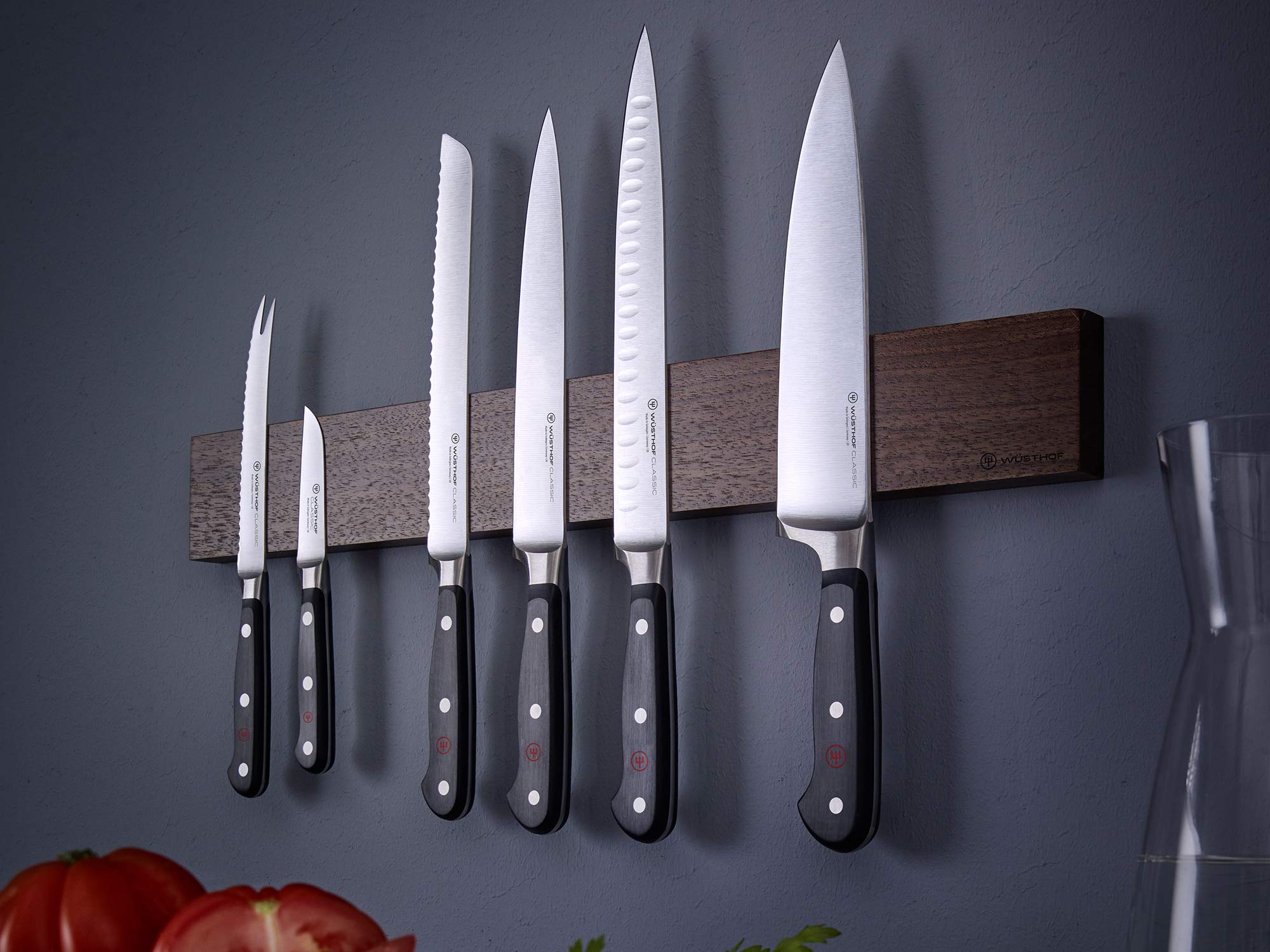
WÜSTHOF Classic 3-Piece Prep Knife Set
It retired the six-blade block it replaced. The one set of knives that genuinely belongs on the counter.
Why we loved it: We love the clean division of labor: the chef's knife handles the main cuts, the paring knife takes detail, and the utility knife bridges the middle. Three blades give a compact kitchen a proper prep rhythm.
Worth knowing: It costs more than a set knife and every blade needs hand washing and regular honing. Skip it if you'd rather replace cheap blades than care for good ones.
See the exact item on Amazon
ZWILLING Professional 12-Inch Oval Sharpening Steel
The knife is the star, but this is the tool that kept it sharp. They belong together, and the steel is the one that gets skipped.
Why we loved it: We love the simple maintenance rhythm: a few strokes before each session, with an oval rod that gives more surface contact and needs fewer strokes than a round steel. It's the small tool that helps an expensive edge stay ready.
Worth knowing: A steel realigns an edge — it doesn't sharpen a dull blade. You'll still need a real sharpening once or twice a year.
See the exact item on Amazon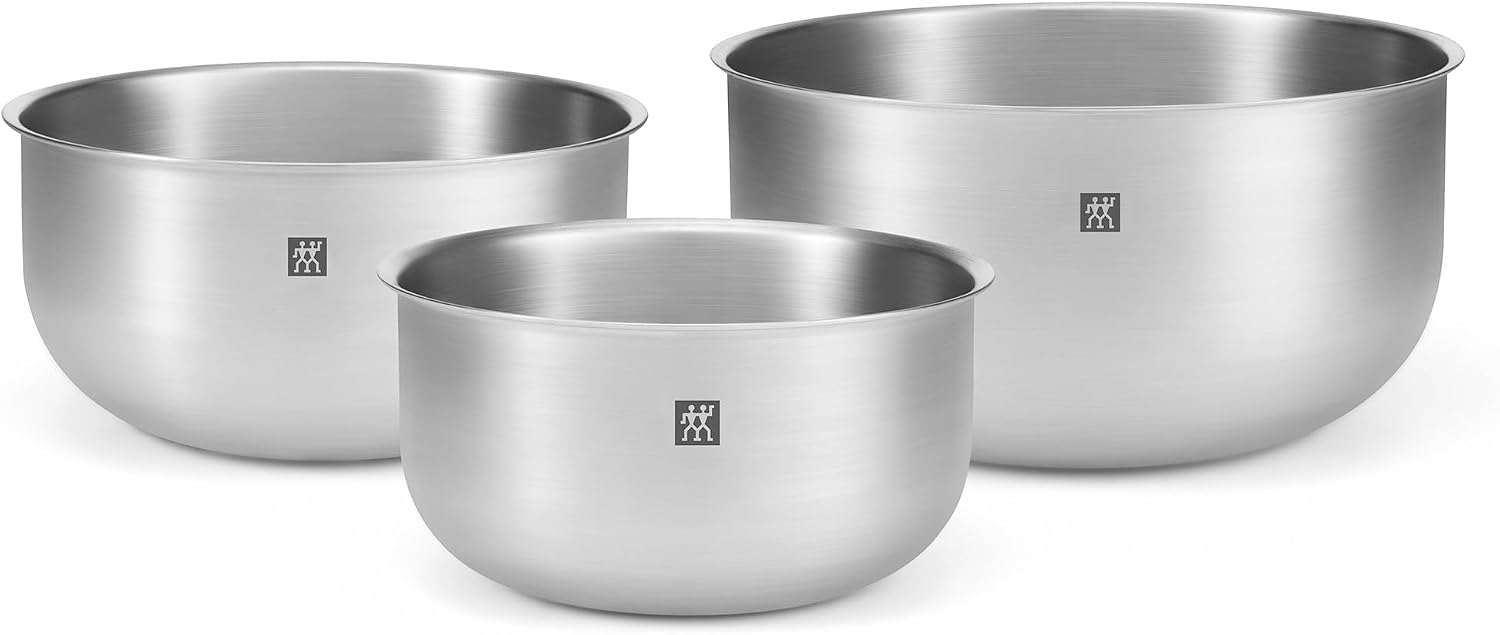
ZWILLING Prep 3-Piece Brushed Stainless Steel Nesting Bowls Set
The large nesting bowl tosses the greens with the dressing and catches the citrus juice without splashing.
Why we loved it: We love bowls that stay put on the counter, rims that pour cleanly, and a brushed stainless finish that hides routine scratches. They nest neatly, replacing a whole stack of stained plastic without making the cupboard feel crowded.
Worth knowing: Stainless is cold to the touch and not for the microwave, and the big bowl is heavy when full. Skip them if you need microwave-safe prep bowls.
See the exact item on Amazon